
Backflow Preventers and Expansion Tanks: What Homeowners Should Know
Key points on this page:
Two Small Plumbing Components That Make a Big Difference
Most homeowners never give a second thought to their backflow preventer or expansion tank. They're small, they sit quietly in the background, and when they're working, you'd never know they were there. But for families in Corpus Christi and the Coastal Bend, these two parts do a lot of heavy lifting. A backflow preventer keeps your drinking water clean. An expansion tank protects your water heater and pipes from the pressure that builds up when water heats.
They do very different jobs, but they're more connected than you might think. When a plumber installs a backflow preventer, check valve, or pressure-reducing valve (PRV), your plumbing can become what's called a closed system. And once that happens, your water heater may need an expansion tank to stay safe.
Why Backflow and Water Pressure Matter
Normally, water flows one way: from the city supply, into your home, and out through your faucets. Backflow is when that water reverses direction and heads back toward the clean supply. It can happen in two ways:
- Back-siphonage: When supply pressure suddenly drops, water can get pulled backward into the lines. This can happen during a water main break, when firefighters open a nearby hydrant, or when demand spikes across the neighborhood.
- Backpressure: Sometimes water gets pushed backward instead. A boiler, pump, or other pressurized equipment can build up more pressure than the incoming city water, forcing water the wrong way.
The real risk shows up at a cross-connection. That's any spot where your drinking water meets something you'd never want to drink, like fertilizer in your sprinkler lines or chemicals in a boiler. Around the house, common cross-connections include irrigation systems, garden hoses, boilers, water softeners, and some filtration systems.
A backflow preventer acts like a one-way gate. It keeps that contaminated water from ever making its way back into the water you and your neighbors drink.
How Backflow Preventers and Expansion Tanks Work
Backflow preventers come in several types, and the right one depends on what it's protecting and how serious the hazard is.
Atmospheric vacuum breakers (AVBs) and pressure vacuum breakers (PVBs) guard against back-siphonage only. Double check valve assemblies use two check valves and protect against both back-siphonage and backpressure. Reduced pressure zone (RP or RPZ) assemblies offer the highest level of protection and are used where the hazard is greater. Each type is built to its own ASSE product standard.
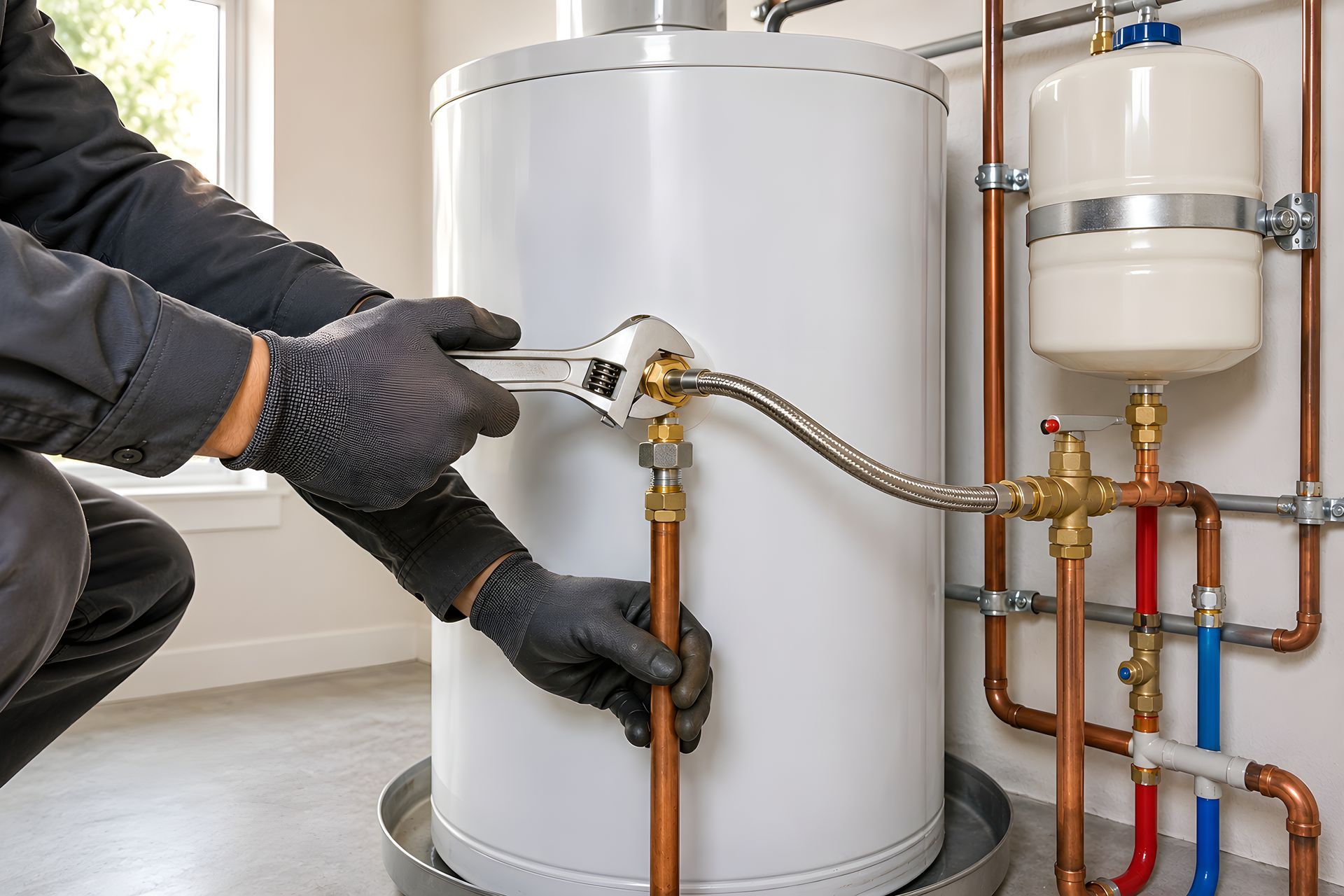
An expansion tank works a little differently. It's a small tank, usually mounted near the cold water line going into your water heater.
Inside, a rubber bladder or diaphragm separates the water from a cushion of compressed air.
Here's why that matters. Water expands as it heats. In an open system, that extra water simply drifts back toward the city main. But once a backflow preventer, check valve, or PRV blocks that path, the extra water has nowhere to go, and pressure starts climbing every time your water heater runs. The expansion tank gives that water somewhere to go, taking the strain off your heater and pipes.
Want to see it in action? This short video from AIM Plumbing Services walks through how backflow prevention and thermal expansion work in a typical home.
Warning Signs Your Plumbing System Needs Attention
A backflow assembly can wear out on the inside without giving you any obvious clues, which is exactly why routine testing matters. Pressure problems from thermal expansion are usually easier to spot if you know what to look for.
Keep an eye out for:
- A temperature and pressure (T&P) relief valve on your water heater that keeps dripping
- Leaks around your water heater, fittings, or supply connections
- Pressure problems that keep coming back throughout the house
- A backflow assembly that hasn't been tested in a while
- A PRV, check valve, backflow device, or water meter that was recently installed (some newer meters come with a built-in check valve)
- An expansion tank that's missing, damaged, or the wrong size
Those repeated pressure spikes don't just affect the water heater. Over time, they can wear on fittings and supply line connections all over your home.
What Should Homeowners Check?
Not sure where your home stands? A few quick checks can tell you a lot.
- Take a look at your water heater. Is there a small tank mounted near the cold water inlet? If not, your home may not have expansion protection.
- Find your irrigation system's backflow device. Texas requires backflow prevention on landscape irrigation systems connected to a public water supply. Locate your assembly and find out when it was last tested.
- Think about recent plumbing work. A new PRV, check valve, backflow preventer, or water meter can quietly turn an open system into a closed one, since some of these include a built-in check valve.
- Don't brush off a dripping relief valve. A T&P valve that keeps dripping isn't normal. It's often your water heater telling you pressure is too high.
- Know your local rules. Texas water systems follow cross-connection control requirements, but the specific devices and testing schedules can vary depending on your city and water provider.
When Professional Plumbing Service Is Recommended
Backflow testing and expansion tank installation are two jobs where guesswork can cost you.
TCEQ sets testing requirements for certain backflow assemblies, and when testing is required, it has to be done by a properly certified tester. Your local water provider may also have its own rules for residential assemblies, including those on irrigation systems.
Expansion tanks need to be sized correctly, based on things like the size of your water heater and your home's static water pressure. The tank's air charge also has to match that pressure before it goes into service. If it doesn't, even the right size tank won't do its job.
If you're not sure what your home needs,
Aim Plumbing can help you figure out what protection makes sense and whether your current equipment is working the way it should.
How to Maintain Your Backflow Preventer and Expansion Tank
Once the right equipment is in place, a little regular attention goes a long way toward avoiding leaks, water heater damage, and compliance headaches.
- Keep a simple record. Jot down what type of backflow device, PRV, and expansion tank you have, where they're located, and when they were installed and last tested.
- Stay on top of backflow testing. If your water provider requires periodic testing, put the due date on your calendar so it doesn't sneak up on you.
- Have the expansion tank's air charge checked every year or two. Tanks slowly lose air over time, and a waterlogged tank can't absorb expansion anymore. A plumber can test the charge and make sure it still matches your home's water pressure.
- Get your PRV looked at now and then. A failing pressure-reducing valve can let your home's water pressure creep up, putting extra strain on your expansion tank and waterheater.
Protect Your Water Supply and Plumbing System
Backflow preventers protect your drinking water, expansion tanks protect your plumbing, and adding one often means you need the other.
If you're unsure whether your home has the right backflow protection, whether an assembly is due for testing, or whether your water heater needs an expansion tank, AIM Plumbing Services can help. Our TCEQ-certified backflow testers serve Corpus Christi and the Coastal Bend.
📞
Call 361-814-7111 to schedule service.
Frequently Asked Questions
Does every home need a backflow preventer?
Not every home needs the same device, but most homes have at least one potential cross-connection. Irrigation systems are almost always required to have backflow protection because fertilizer and pesticides can be pulled back into the water line. For outdoor hoses, a hose bibb vacuum breaker is usually a simple, inexpensive fix. Boilers, water softeners, and some filtration systems may also need protection, depending on the setup and local requirements.
Does every water heater need an expansion tank?
Not necessarily. An expansion tank is needed when your plumbing is a closed system. A backflow preventer, check valve, or pressure-reducing valve can create that condition, and so can a new water meter with a built-in check valve, often without the homeowner realizing it.
How often should a backflow preventer be tested?
Most local water providers require annual testing for residential assemblies such as irrigation RPZs and double check valves. The test must be done by a TCEQ-certified tester. Our certified testers can handle yours and keep you on schedule.
Can I install an expansion tank myself?
We don't recommend it. Expansion tanks must be correctly sized and pre-charged to match your home's static water pressure, installation means cutting into a pressurized water line, and the work can require a permit and inspection. Our licensed plumbers handle all of it.
How much do backflow and expansion tank services cost?
Costs depend on the type of backflow device, testing requirements, accessibility, water pressure, water heater size, and whether equipment needs to be installed or replaced. An on-site evaluation lets us see what your system actually needs and give you an accurate estimate.
This post is general information, not a legal interpretation of any code. Requirements vary by city, so confirm with your water provider or give us a call.