Banging Pipes? High Water Pressure Could Be the Cause
Why Are Your Banging Pipes Making Noise?
If you're hearing banging pipes in your Corpus Christi, Portland, Ingleside, Beeville, Sinton, or surrounding Coastal Bend home, high water pressure could be the culprit. While occasional plumbing noises may seem harmless, persistent banging or knocking sounds often indicate an underlying issue that should be addressed before it leads to damaged pipes or costly repairs.
Many homeowners assume noisy pipes are simply part of an older plumbing system, but that's not always the case.
Understanding what causes banging pipes can help you protect your plumbing and restore peace and quiet to your home.
How High Water Pressure Can Cause Banging Pipes
Water pressure plays an important role in your home's plumbing system. When it's within the recommended range, water flows smoothly through your pipes and fixtures. However, when the pressure becomes too high, water moves with greater force, putting extra stress on your plumbing.
One common result is a phenomenon known as "water hammer." When a faucet, washing machine, dishwasher, or other appliance suddenly shuts off the water supply, the fast-moving water has nowhere to go. The sudden stop creates a pressure wave that causes pipes to bang or knock against framing, walls, or other plumbing components.
Although water hammer is a common cause, consistently high water pressure can make these noises more frequent and increase wear on your plumbing system over time.
Signs Your Plumbing May Have a Water Pressure Problem
Banging pipes are often accompanied by other warning signs that your water pressure may be too high.
Common symptoms include:
- Loud banging or knocking sounds after turning off faucets or appliances
- Pipes that vibrate when water is running
- Faucets that spray water with excessive force
- Frequent leaks around plumbing fixtures
- Dripping faucets despite recent repairs
- Appliances like washing machines or dishwashers wearing out prematurely
- Unexpected increases in your water bill due to plumbing leaks
If you're experiencing several of these issues together, it's a good idea to have your
plumbing system evaluated before more serious damage occurs.
What You Can Do Before Calling a Plumber
If you've recently started hearing banging pipes, there are a few simple steps you can take before scheduling professional service.
- Listen carefully to determine when the noise occurs, such as after using a faucet or appliance.
- Check visible plumbing for loose pipe straps or brackets.
- Test multiple faucets to see if the noise occurs throughout the house or only in one area.
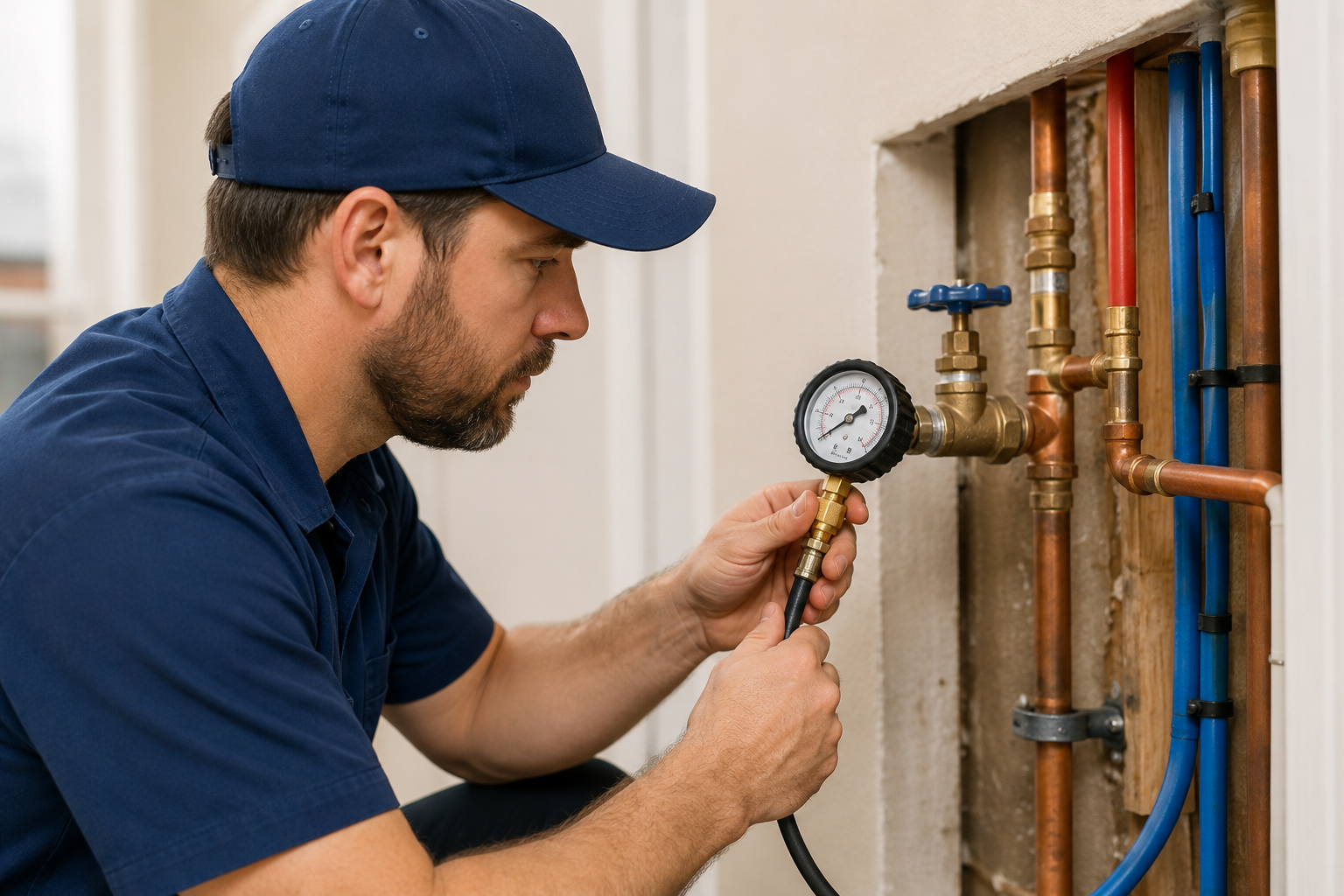
- If you have a water pressure gauge, check your home's water pressure to ensure it falls within the recommended range.
- If the banging continues, avoid ignoring the problem, as ongoing pressure issues can damage your plumbing system.
While these steps may help identify the source of the noise, they typically won't resolve underlying water pressure problems.
When Professional Plumbing Service Is the Best Solution
If banging pipes continue despite your troubleshooting efforts, it's time to call a professional plumber. High water pressure, failing pressure regulators, loose piping, or water hammer issues often require specialized tools and expertise to diagnose correctly.
A licensed plumber can inspect your plumbing system, test your home's water pressure, identify the cause of the noise, and recommend the appropriate repairs. Whether that involves adjusting your water pressure, installing water hammer arrestors, securing loose pipes, or repairing damaged plumbing, professional service helps prevent larger problems down the road.
If high water pressure is causing damage to your plumbing system, professional plumbing repair can help restore your home's plumbing and prevent future issues.
Tips to Help Prevent Banging Pipes
While not every plumbing issue can be prevented, a few simple habits can reduce the likelihood of water pressure problems.
- Have your home's water pressure checked during routine plumbing inspections.
- Repair leaks promptly before they become larger issues.
- Replace worn or failing pressure-reducing valves when necessary.
- Schedule plumbing inspections if your home has older pipes.
- Don't ignore unusual plumbing noises, even if they seem minor at first.
Taking a proactive approach can help extend the life of your plumbing system and reduce the risk of expensive repairs.
Don't Ignore Banging Pipes in Your Home
Banging pipes are more than just an annoyance—they're often a warning sign that something isn't functioning properly within your plumbing system. Addressing the problem early can help prevent burst pipes, water damage, fixture failures, and costly repairs.
If you're hearing banging or knocking noises in your plumbing, Aim Plumbing Services is here to help homeowners throughout Corpus Christi, Portland, Ingleside, Beeville, Sinton, and the surrounding Coastal Bend identify the cause and provide reliable solutions.
📞 Call Aim Plumbing Services at
361-814-7111 today to schedule your plumbing inspection.
Frequently Asked Questions
Why do my pipes make a banging noise when I turn off the water?
This is often caused by water hammer, which occurs when fast-moving water suddenly stops and creates a pressure wave inside your plumbing system. High water pressure can make this problem worse.
Is high water pressure bad for my plumbing?
Yes. Excessively high water pressure can increase wear on pipes, fixtures, water heaters, appliances, and plumbing connections, leading to leaks and premature failures.
Can loose pipes cause banging noises?
Yes. Pipes that aren't properly secured can move when water flows through them, creating knocking or banging sounds against walls or framing.
How much does it cost to fix banging pipes?
The cost depends on what's causing the problem. A plumber can inspect your plumbing system and provide an estimate based on whether the issue involves high water pressure, loose pipes, or water hammer.
Should I ignore banging pipes if they only happen occasionally?
No. Even occasional banging can indicate a developing plumbing issue. Having the problem inspected early may help prevent more extensive damage and expensive repairs later.