
Slow Kitchen Drain This Summer? It Could Be Grease Build-Up
Why Is Your Kitchen Drain Slowing Down This Summer?
If you've noticed a slow kitchen drain in Corpus Christi, Portland, Ingleside, Beeville, Sinton, or the surrounding Coastal Bend, grease build-up inside your pipes may be the cause. Summer often means more family meals, outdoor cookouts, and frequent cooking, all of which can lead to more grease entering your kitchen drain.
A slow drain may seem like a minor inconvenience at first, but it can quickly turn into a complete blockage if left untreated. Knowing what causes grease build-up and how to prevent it can help you avoid messy backups and costly plumbing repairs.
Why Grease Causes Slow Kitchen Drains
Many homeowners assume that pouring hot grease down the drain is harmless because it's a liquid. Unfortunately, once grease cools inside your plumbing system, it begins to harden and cling to the inside of your pipes.
Over time, grease combines with food scraps, soap residue, coffee grounds, and other debris. This gradually narrows the pipe until water can no longer flow freely, resulting in a slow kitchen drain or even a complete clog.
Summer cooking habits often make this problem worse, especially after grilling, frying foods, or preparing large family meals.
Signs Grease Build-Up May Be Causing the Problem
A slow drain doesn't always happen overnight. Grease build-up usually develops gradually, giving homeowners several warning signs before a blockage occurs.
Common symptoms include:
- Water draining slowly from the kitchen sink
- Gurgling sounds coming from the drain
- Unpleasant odors from food trapped in the pipes
- Water backing up into the sink
- Frequent clogs despite using a plunger
- Multiple slow drains connected to the kitchen plumbing
If you notice any of these signs, it's a good idea to address the issue before the blockage becomes more severe.
What You Can Do Before Calling a Plumber
If your kitchen drain has only recently started slowing down, there are a few safe steps you can try.
- Remove any visible food debris from the drain opening.
- Flush the drain with hot water followed by a small amount of dish soap to help loosen minor grease residue.
- Use a sink plunger to dislodge small blockages.
- Avoid using harsh chemical drain cleaners, as they can damage pipes and may not fully remove grease build-up.
- Continue monitoring the drain to see if the problem improves.
If the drain remains slow after these steps, the blockage may require
professional drain cleaning.
When It's Time to Schedule Professional Drain Cleaning
Persistent slow drains often indicate that grease has accumulated deep inside the plumbing system where household remedies cannot reach.
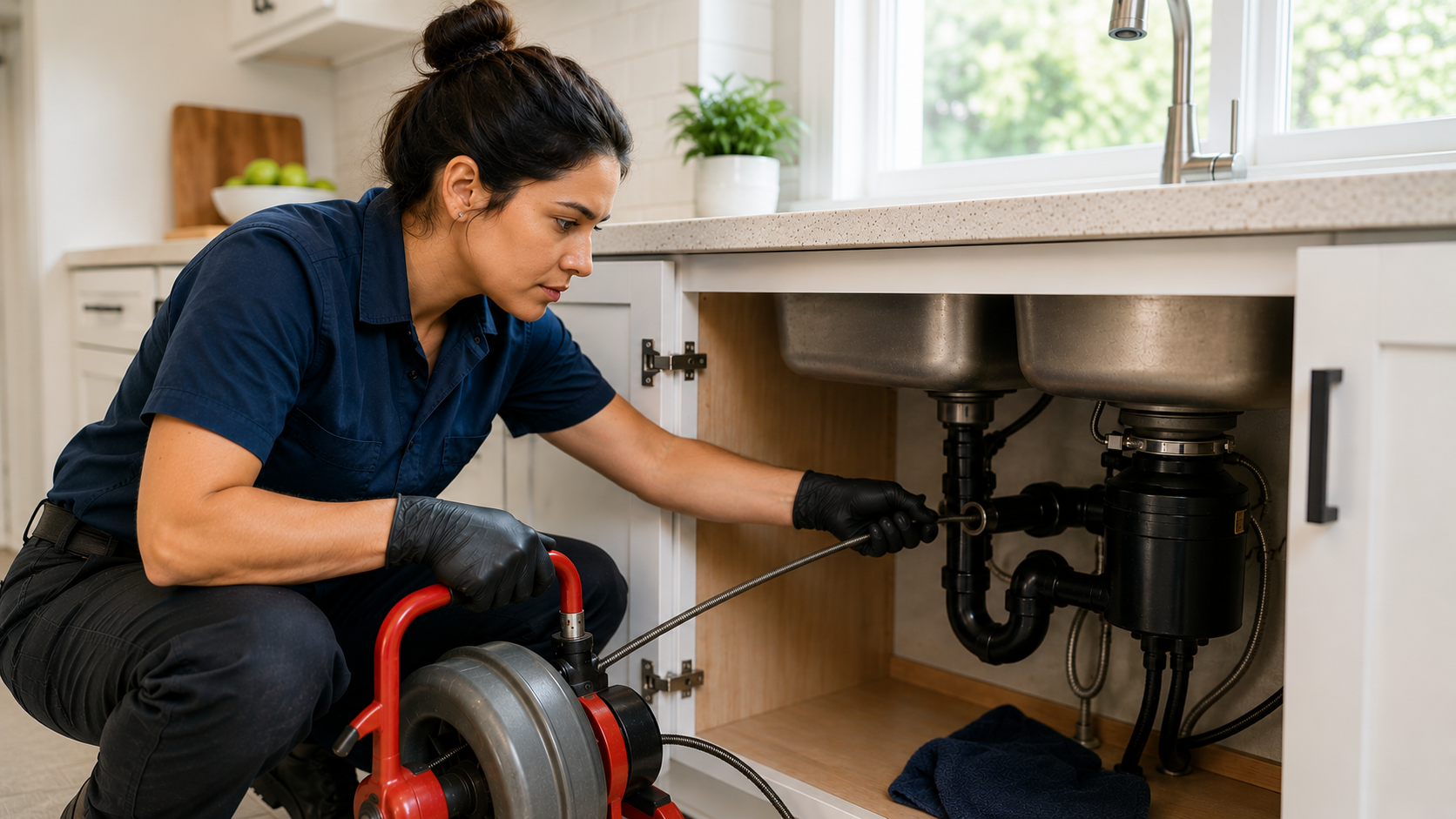
Professional drain cleaning removes grease, food residue, and other debris without damaging your pipes. Specialized equipment can thoroughly clear the blockage while restoring normal water flow.
Scheduling service early can help prevent complete drain blockages, kitchen sink backups, and more expensive plumbing repairs later.
Tips to Prevent Grease Build-Up
Preventing grease clogs is much easier than removing them.
Here are a few simple habits that can help keep your kitchen drains flowing properly:
- Never pour cooking grease or oil down the drain.
- Allow grease to cool before disposing of it in the trash.
- Wipe greasy pots and pans with a paper towel before washing them.
- Use a sink strainer to catch food scraps.
- Avoid putting coffee grounds, pasta, rice, or fibrous foods into the garbage disposal.
- Schedule routine drain cleaning if your home experiences frequent slow drains.
These small changes can significantly reduce the likelihood of future plumbing issues.
Don't Let a Slow Kitchen Drain Become a Bigger Problem
A slow kitchen drain is often the first warning sign of grease build-up inside your plumbing system. Addressing the issue early can help prevent complete clogs, unpleasant odors, water backups, and unnecessary repair costs.
If your kitchen sink isn't draining properly, the team at Aim Plumbing Services is ready to help homeowners throughout Corpus Christi, Portland, Ingleside, Beeville, Sinton, and the surrounding Coastal Bend restore proper flow.
📞
Call Aim Plumbing Services at
361-814-7111 today to schedule professional drain cleaning services.
Frequently Asked Questions
Why does my kitchen drain get slower during the summer?
Summer often brings more cooking, grilling, and family gatherings, which can increase the amount of grease, oils, and food debris entering your plumbing system. Over time, these materials build up inside the pipes and restrict water flow.
Can hot water dissolve grease in my pipes?
Hot water may temporarily move grease through the drain, but it usually cools farther down the pipe and hardens again. This allows grease to continue building up over time.
Are chemical drain cleaners safe to use?
Most chemical drain cleaners are not recommended for grease clogs. They may damage certain plumbing materials and often fail to completely remove grease build-up.
How much does professional drain cleaning cost?
The cost depends on the severity of the blockage and the cleaning method required. Contact Aim Plumbing Services for an inspection and a personalized estimate based on your plumbing system.
How can I prevent grease clogs in the future?
Dispose of grease in the trash after it cools, use sink strainers to catch food debris, avoid putting grease and oils down the drain, and schedule routine drain cleaning if you experience recurring slow drains.