
Garbage Disposal Do’s & Don’ts for Texas Homeowners
This is a subtitle for your new post
Garbage Disposal Do’s and Don’ts: What Texas Homeowners Should Never Put Down the Sink
Garbage disposals are one of the most convenient kitchen tools—until they stop working.
At Aim Plumbing Services LLC, we see it all the time: a disposal that suddenly jams, starts humming, drains slowly, or backs up into the sink… all because of a few “everyday” items that never should’ve gone down there in the first place.
If you’re a homeowner in Texas, this guide will help you avoid messy clogs, strange odors, expensive repairs, and emergency plumbing visits—especially during the busy winter season when kitchens get used the most.
Why Garbage Disposals Get Clogged So Easily
A garbage disposal is not a trash can—it’s a grinder that can only handle small scraps and soft organic materials in tiny amounts.
Most disposal problems happen when the wrong items create:
- Greasy buildup inside pipes
- Dense sludge that sticks to the drain line
- Hard objects that jam the blades
- Fibrous materials that wrap around internal parts
That’s why learning what not to put down your disposal can save you a ton of trouble.
The #1 Rule: If It Expands, Hardens, or Wraps — Keep It Out
If you only remember one thing, make it this:
✅
Soft + small = safe
❌
Greasy + starchy + fibrous + hard = disaster
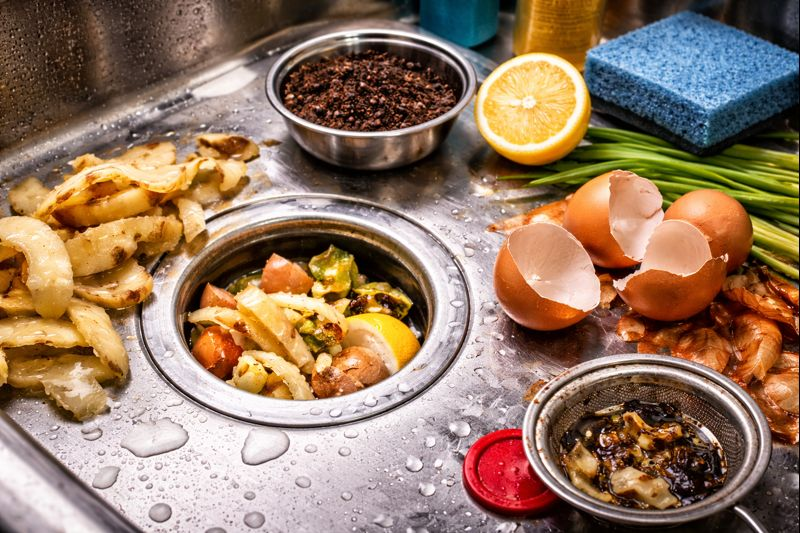
Garbage Disposal DON’Ts (What Texas Homeowners Should Never Put Down the Sink)
Grease, Oil, and Fat
It might go down as a liquid, but it cools quickly and sticks to the inside of your plumbing.
Common examples:
- Bacon grease
- Cooking oil
- Butter
- Meat drippings
What it causes: sticky buildup, sewer smells, slow drains, full sink backups
Coffee Grounds
Coffee grounds don’t dissolve—they pack together into a thick, heavy sludge that clogs drains over time.
What it causes: slow draining sinks, disposal clogs, recurring backups
Pasta, Rice, Bread, and Other Starches
These are some of the worst offenders because they expand with water and turn into a paste-like glue.
Avoid putting these into your disposal:
- Rice
- Pasta
- Oatmeal
- Bread
- Flour-heavy scraps
What it causes: thick drain blockages that don’t flush away easily
Eggshells
There’s a popular myth that eggshells “sharpen” your disposal blades. In reality, they often create gritty residue and contribute to clogs.
What it causes: buildup, gritty sludge, drain line issues
Fibrous Foods (Celery, Onion Skins, Corn Husks, etc.)
Fibrous scraps can wrap around the disposal’s internal components like a rope.
Examples to keep out:
- Celery
- Corn husks
- Onion skins
- Artichokes
- Asparagus
What it causes: jammed disposal, humming sounds, overheating, slow drainage
Bones, Pits, and Hard Objects
Even “small” bones can jam the disposal and damage internal parts.
Hard items to avoid:
- Chicken bones
- Fruit pits (peach, avocado, etc.)
- Shells
- Hard scraps
What it causes: jammed blades, broken disposal components, leaking under the sink
Potato Peels
Potato peels are starchy and fibrous—double trouble.
What it causes: thick paste clogs + jam risk
Stringy or Tough Meat Scraps
Some meat scraps can tangle inside the disposal or contribute to greasy buildup.
What it causes: clogs, odors, sluggish drain performance
Garbage Disposal DO’s (How to Use It the Right Way)
Run Cold Water Before, During, and After
Cold water helps solidify fats so they move through instead of coating the inside of your pipes.
- Run cold water for 15 seconds before
- Keep it running while grinding
- Let it run 15–30 seconds after
Feed Small Amounts at a Time
Too much food at once can overload the disposal and slow the drain line.
✅ A little at a time = smoother grinding
❌ Large dumps = clogs + jams
Cut Scraps into Smaller Pieces
This makes grinding easier and reduces strain on the motor.
Use the Trash Can for the Heavy Stuff
When in doubt, throw it out.
A garbage disposal is meant for tiny leftovers, not full plates or meal prep waste.
Signs Your Garbage Disposal Is Clogged or About to Fail
If you notice any of these symptoms, your disposal or drain line may already be partially blocked:
- Water backing up into the sink
- Slow draining even after running the disposal
- Loud grinding noises
- A humming sound with no spinning
- Bad odors that keep coming back
- Leaking under the sink
If you’re dealing with these signs, it’s best to address it early before it turns into a full kitchen backup.
When to Call a Texas Plumber Instead of Trying DIY
Some disposal issues can get worse fast if the clog is deeper in your plumbing or if the unit is damaged.
You should call a professional if:
- The disposal repeatedly clogs
- The sink won’t drain even after resetting
- You smell sewage odors
- Water backs up into other drains
- You see leaks under the cabinet
Need Help With a Clogged Disposal or Kitchen Drain?
If your garbage disposal is jammed, your kitchen sink won’t drain, or you’re noticing recurring clogs, Aim Plumbing Services LLC is here to help.
📞 The best way to reach us is by phone at (361) 814-71111, or through our contact page.
Categories: Plumbing